Nothing Is Original. So Why Do We Pretend It Is?
A personal take on creativity, originality, and learning to trust my process.

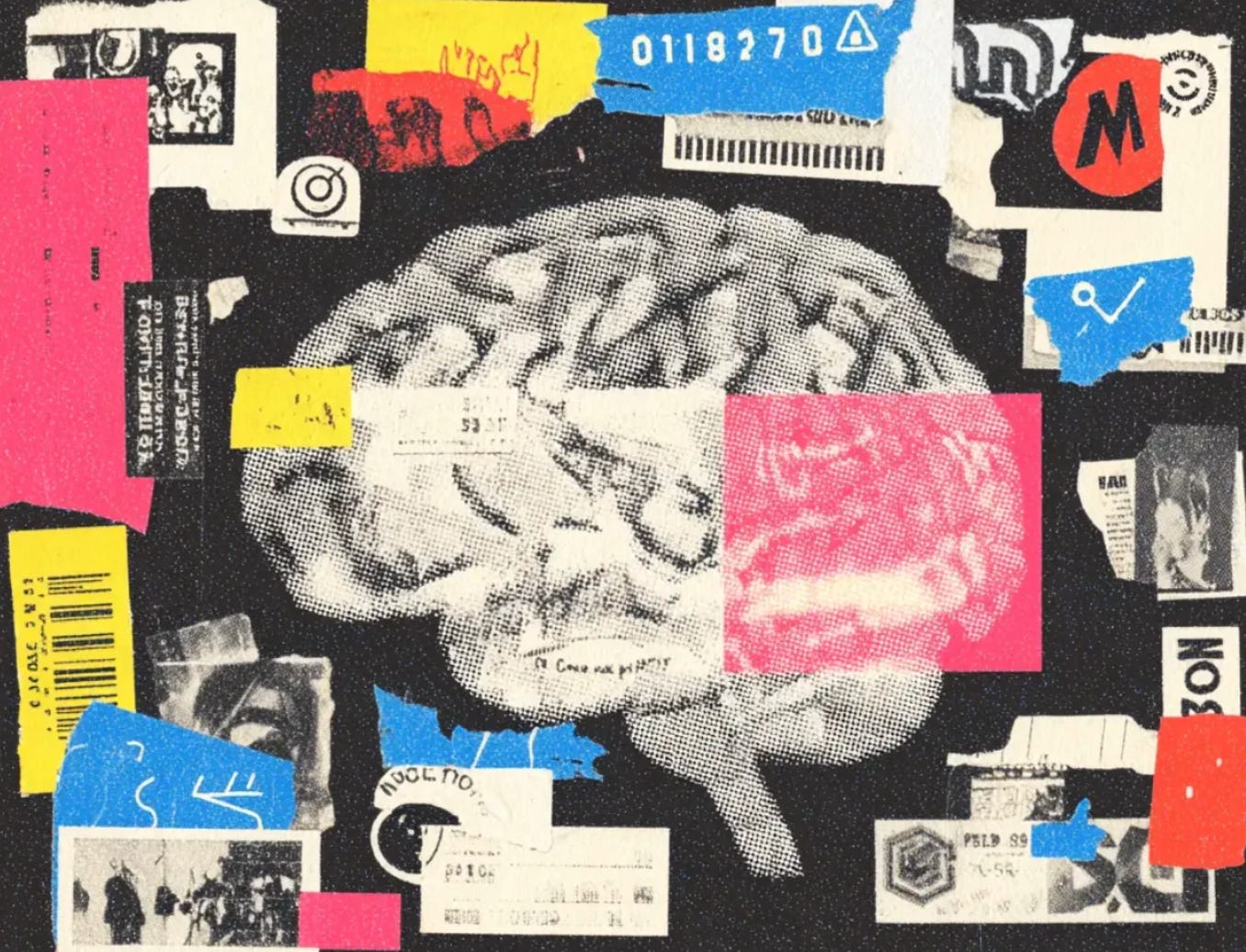
I used to think creativity meant invention.
Now I think it means connection.
I Don’t Work Like Everyone Else — And That’s the Point
For a long time, I felt like I had to justify how I worked.
If I didn’t start with a blank canvas… if I moved too fast… if my ideas came from somewhere else first… it felt like cheating. Like I wasn’t being original. Like I wasn’t doing it right.
But I don’t work in clean, step-by-step phases.
My ideas come fast, layered with references. I’m pulled in by mood, texture, tone — not just strategy or structure. I collect what sparks something in me and build from there.
For a long time, I thought I had to fight that.
Now I know it’s actually my edge.
My creativity starts with what moves me — and builds from there.
Everything Is a Remix
In 2010, filmmaker Kirby Ferguson released a video series called Everything Is a Remix, and it put into words something I’d always felt but didn’t know how to articulate.
His argument was simple, but huge: all new ideas are built from existing ones. Creation is not about pulling something out of thin air — it’s about copying, combining and transforming. That’s how music works. That’s how movies evolve. That’s how culture moves forward.
Around the same time, I read Steal Like an Artist by Austin Kleon — another moment where everything clicked. He wasn’t saying “steal” in the dishonest sense. He meant that creativity is built on influence — that nothing is truly original, and that borrowing with intention is part of how we discover our voice.
Both of those ideas helped me see that the way I work isn’t a shortcut or a compromise.
It’s part of a much longer, very human tradition.
The more I’ve leaned into my own process — gathering, layering, reinterpreting — the more I’ve noticed that my work actually feels more like me, not less. It doesn’t matter where something starts. What makes it original is how I shape it.
Remixing Is Everywhere — Even If We Don’t Call It That
Some of the most celebrated forms of creativity are built on remixing.
Sampling. Collage. Found object art. Meme culture.
They’re not shortcuts. They’re art forms — ways of taking what already exists and bending it into something personal, weird, funny, emotional, or totally new.
We do this kind of thing constantly — quoting movies, blending styles, stitching together playlists, saving images that speak to something we can’t quite explain. It’s not a niche creative technique. It’s instinct. It’s how we process. It’s how culture evolves.
But when remixing crosses into public or commercial space, it suddenly gets complicated. Copyright kicks in. Ownership takes over. And the same thing that feels natural when we do it privately becomes taboo when we share it publicly.
Disney is a perfect example . Their whole brand was built by remixing public domain stories — fairy tales, mythology, folklore — and making them their own. But once it’s theirs, they lock it down tight. And sure, some of those originals are finally entering the public domain, but it took almost a hundred years. That timeline doesn’t make sense anymore — not in a culture that moves this fast.
Sampling is another one. It built entire genres — hip hop, electronic, pop. But unless you’ve got the budget to clear it, it’s considered theft. Same technique, different rules depending on who’s doing it.
Some of my biggest inspirations, like Daft Punk — built entire worlds out of sampling.
They didn’t just lift sounds; they cut, transformed, and reassembled pieces of music history into something futuristic and iconic. That’s remixing at its highest form: not hiding your influences, but honoring them by making them feel brand new.
I think that’s what makes sampling so powerful — it brings old work into new light.
You’re not just creating something cool. You’re pulling from the archive, reactivating ideas, and exposing people (including yourself) to pieces of history they might never have heard otherwise. There’s something really beautiful about that.
Bootlegs — A Tangent
I’m a bit anti-authority and I’ve always loved making bootleg stuff just for fun. Making things that shouldn’t exist.
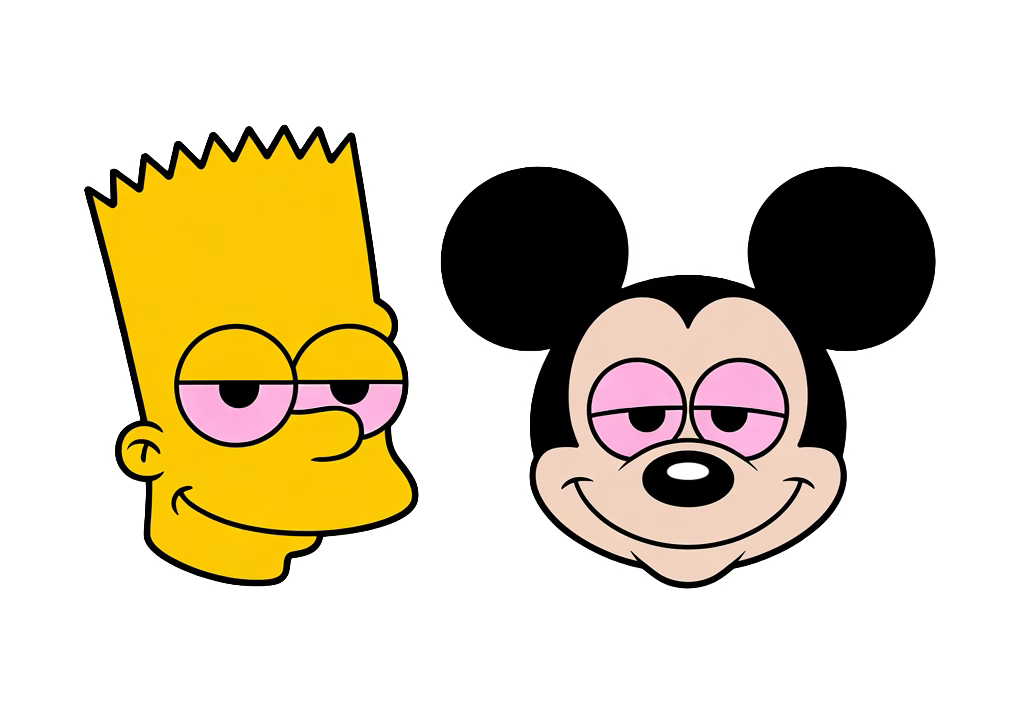
For my 40th birthday I took a trip to Disneyland, I made a Simpsons-meets-Disneyland shirt: Mickey and Bart on the front, both stoned, passing a joint. On the back was a Simpsons-style version of the castle with weed smoke curling out of the tower window to spell The Happiest Place in Springfield. I ended up censoring it so I didn’t get kicked out of the park — but man, that remix was me. A little nostalgic, a little rebellious, a lot of joy.
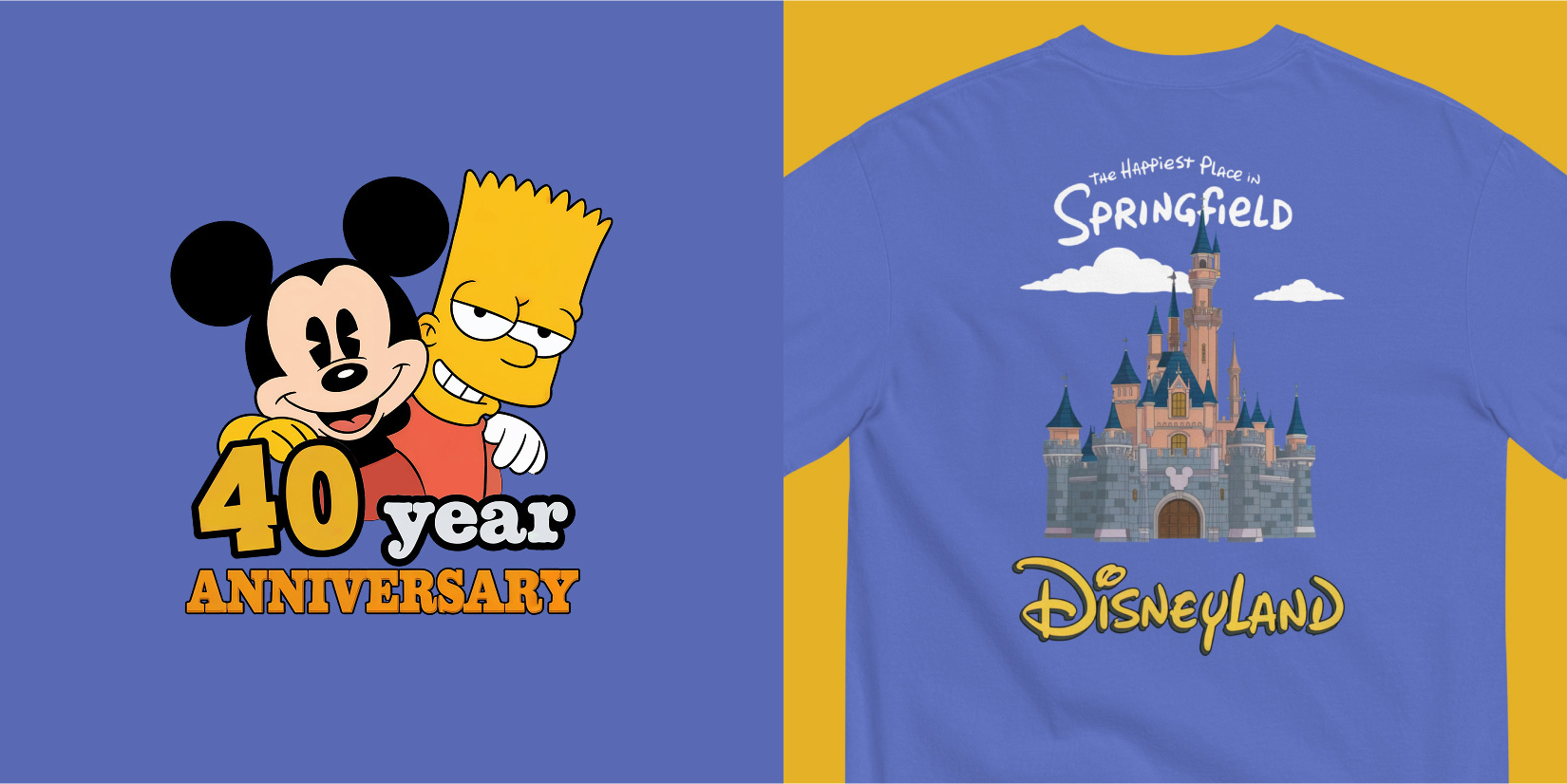
Not all bootlegs are good — a lot of them are lazy copies or quick cash grabs. But some? They’re thoughtful, clever, even iconic. They remix the familiar into something more expressive. They fill in what the original missed — or couldn’t say. That’s what I love about them.
Slobby Robby, a bootleg collector and owner of Generation Cool — a vintage shop in Tucson known for rare ’80s and ’90s streetwear, designer knockoffs, and pop culture relics — explained on his Netflix series Slobby’s World the difference between counterfeits and bootlegs. Counterfeits are made to deceive — to look like the real thing and pass as authentic. Bootlegs, on the other hand, remix original designs into something new. They’re usually made in small batches by fans or independent designers, not to trick anyone, but to add a twist, make a statement, or celebrate the original in a new way. The best ones have personality and soul — sometimes more than the originals they’re riffing on.
That’s the kind of remixing I care about.
Made to celebrate. To laugh. To say something familiar in a new way.
Remixing doesn’t erase meaning. It adds new layers.
It brings things forward in ways they couldn’t move on their own.
Over-Inspired on Purpose
I’ve always been over-inspired.
I save everything — screenshots, comics, memes, packaging, branding, textures, old ads, storefronts, vintage figurines, weird corners of the internet. My camera roll is chaos. My saved folders are overflowing. For a long time, I thought that made me scattered. Disorganized. Too easily distracted.
Turns out a lot of creative directors and designers are the same way. We hoard what resonates. We collect sparks.
What helped make all this useful was finding a tool that actually works with that instinct — mymind. It lets me save whatever I want, whenever I want, and search it later without organizing a thing. No folders. No systems. No pressure to curate. Just my brain, outside of my head.
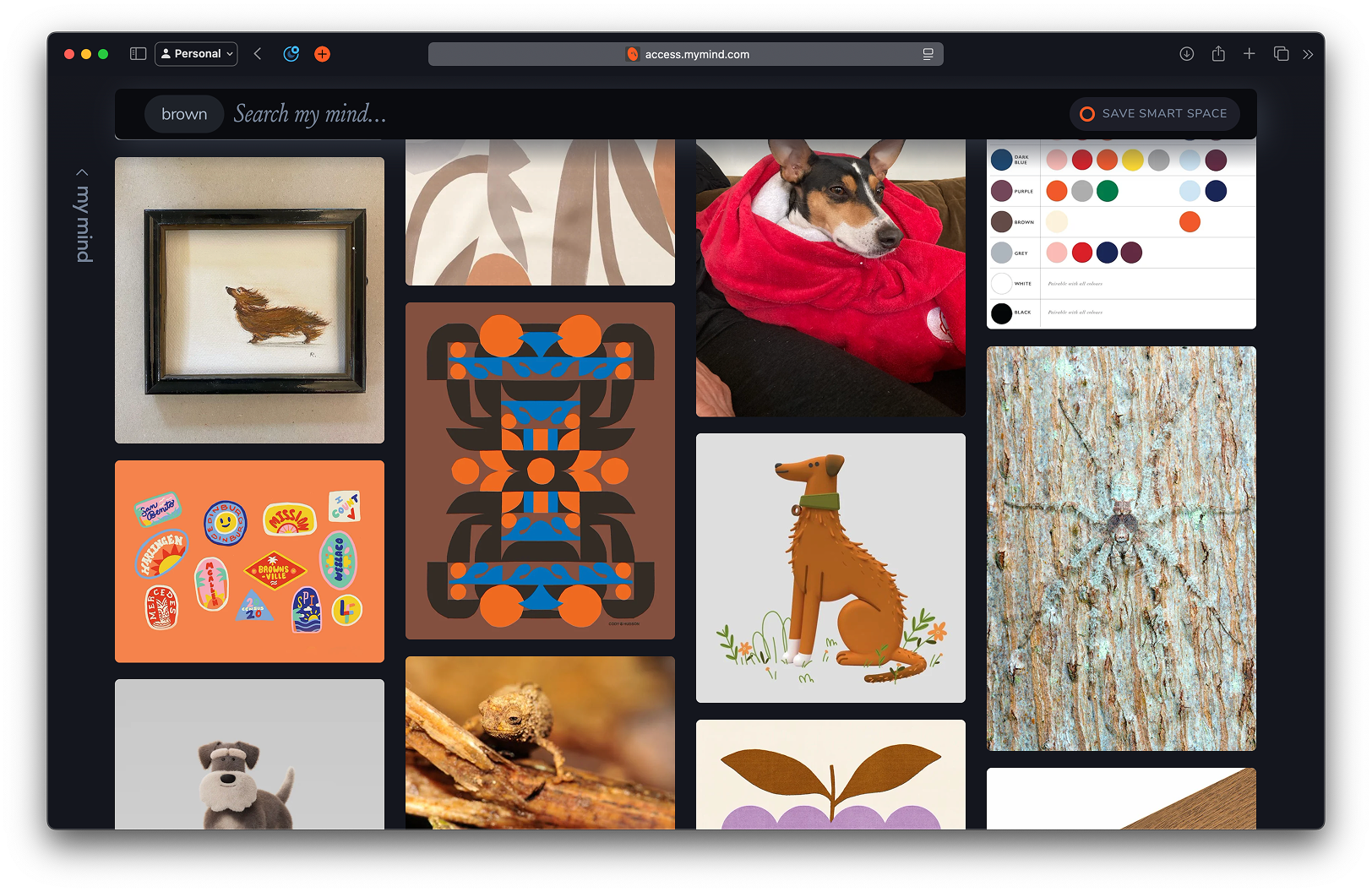
And over time, I started to realize something important:
I’m not pulling directly from the things I save. But by living in that headspace — surrounded by references, moods, styles, textures — my ideas naturally evolve. My taste sharpens. My sense of direction gets stronger.
I used to think inspiration was something you had to go find.
Now I know: it’s something you can build around yourself.
Remixing, for me, doesn’t start with a blank canvas.
It starts with what’s already in my orbit — and asking:
What could I do different?
Then AI Showed Up
When AI entered my process, it didn’t feel like a threat — it felt like a breakthrough.
I’ve written before about how I’ve always been drawn to the intersection of creativity and technology.
For the first time, I had a creative partner that could move as fast as my brain.
I didn’t have to slow down to figure out a tool or wrestle with execution before the idea slipped away. I could just… try something. And then try something else. It gave me momentum when I needed it most.
It wasn’t about cutting corners.
It was about staying in motion.
My process isn’t step-by-step — it’s more like following sparks through fog.
I don’t always know where something’s headed, but when it lights up, I need to move.
AI lets me catch the idea before it drifts.
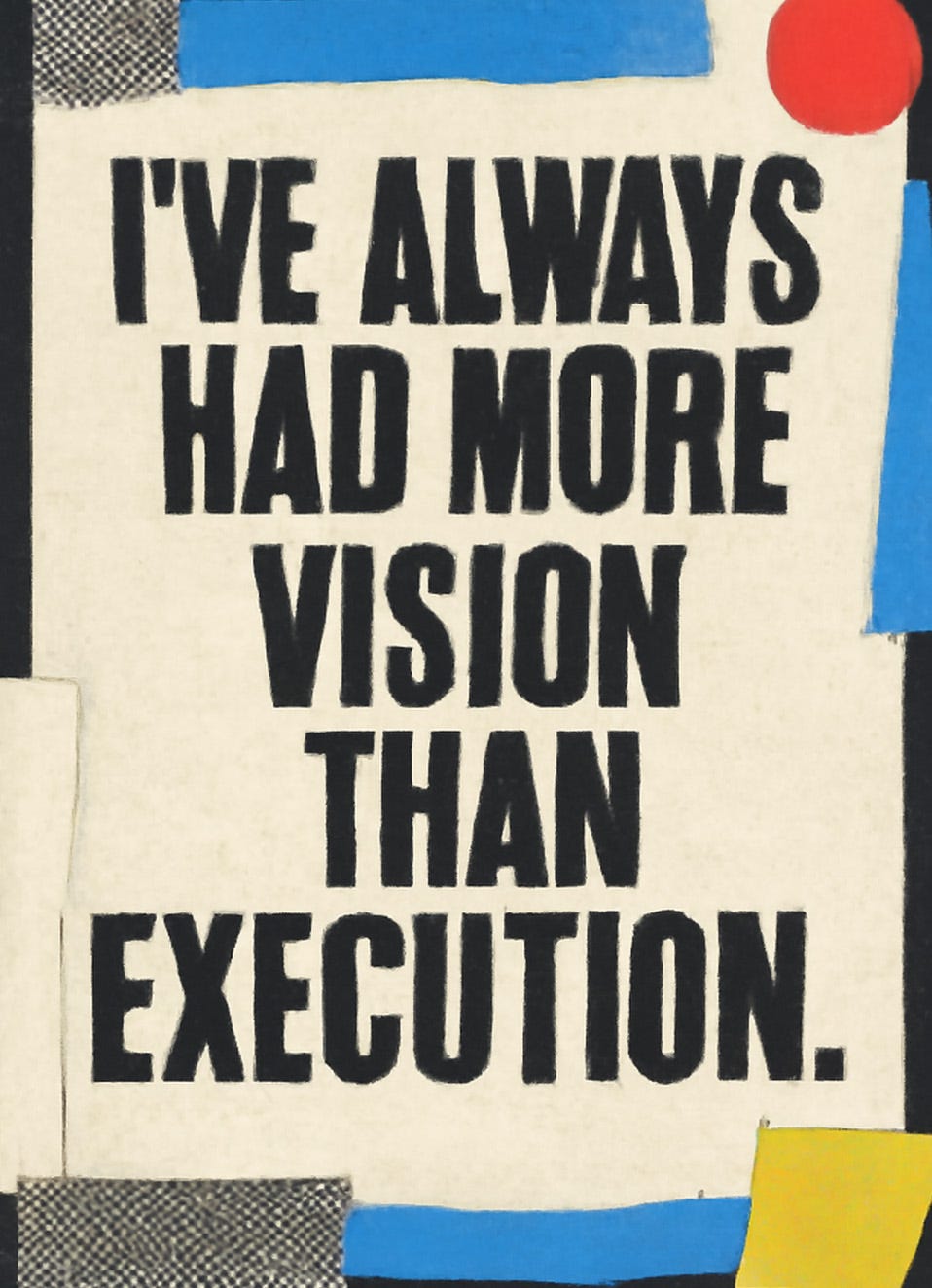
My taste would tell me where something needed to go, but my skills couldn’t always get me there. AI helped close that gap — not by replacing the work, but by keeping the momentum going long enough to figure it out.
Sometimes the output was perfect.
Other times it wasn’t at all what I was aiming for — but in the best way, taking me on an amazing detour.
It became a sketchbook, a collaborator, a remix machine that helped me explore without overthinking.
It let me get weird without the limitation of time.
And it gave shape to things I used to abandon halfway through, simply because I couldn’t make them match what I imagined.
For someone whose creativity doesn’t move in straight lines, that changed everything.
Taste, Skill, and the Space Between
Early in my career, I thought I had to do everything the hard way for it to count.
I’d obsess over details, spend hours making three different versions of a project for a presentation, only for the work to get thrown away or end up with a Frankenstein hybrid because no one could fully articulate what they wanted. I thought if I just worked harder, refined more, mastered all the tools, I’d get better results.
What I’ve learned is: it’s not always about mastery. It’s about movement.
I’ve always been someone with a wide range of interests — design, code, illustration, branding. That curiosity helped me develop range, but it also made it hard to go deep on one thing. I wasn’t trying to become an expert in every tool. I was following where my mind wanted to go, which made sense for how my brain works.
AI didn’t take away the need for craft. It just removed the roadblocks that kept me stuck.
Now I can explore faster, refine faster, get the ideas out of my head and into a format I can build on. I can chase a feeling, test a weird thought, or bring someone else’s vision to life without it taking forever — or draining me before the good part.
I don’t measure success by how “perfect” something looks anymore.
I care more about whether it feels right.
The tools got faster. My work got freer.
And I finally stopped worrying about whether I was doing it the “right” way — because it turns out, my way works just fine.
It’s Not All Slop
I know the criticism.
That AI work is soulless. Cheap. Lazy. That it floods the world with noise and kills originality. And in some (or most) cases? That’s fair.
There’s a lot of AI content out there that feels empty — rushed outputs with no taste, no thought, no point of view. I get why people are concerned.
But the truth is: thoughtless work existed long before AI.
Bad design. Lazy branding. Creative with no soul. The problem isn’t the tool. It’s how it’s used.
I don’t see AI as a replacement for creativity.
I see it as an extension — a way to move faster, yes, but also to go deeper.
To get to the idea behind the idea.
To explore what something could be, not just what’s been done before.
If you’re using AI to copy, that shows.
But if you’re using it to think, to remix, to clarify — that shows too.
Good work still stands out.
Taste still matters.
Intent still matters.
Craft still matters.
I’m not trying to replace myself.
I’m trying to support myself — so I can do the work I care about, in a way that works for me.
This Isn’t the End of Creativity. It’s Just Evolving.
Maybe this isn’t a crisis.
Maybe it’s just a shift.
We’ve always built on what came before — whether we admit it or not.
We’ve always built from our inspiration. Always referenced. Always borrowed, bent, and reshaped ideas to reflect who we are and the world around us.
Creativity has never been about total originality.
It’s about interpretation. Taste. Perspective.
It’s not just what you make. It’s how you see.
AI didn’t take that away from me.
It gave me more ways to show it.
I’m not afraid of tools that help more people create.
I’m not afraid of work that evolves.
Because I know my ideas don’t come from nowhere — they come from everywhere I’ve been.
And when I follow that trail — the result always feels like mine.
Maybe the most creative thing we can do right now isn’t starting from scratch, but building something meaningful from what we already have.
Stay curious,
Matthew